8–12 Week Clinic Pilot: EMR Integrated Prior Authorization Automation
· 8 min read

8–12 Week Clinic Pilot: EMR Integrated Prior Authorization Automation
Provider-side prior authorization automation is an EMR-integrated system that auto-extracts chart evidence, drafts payer-specific requests and appeals, submits them through the right channel, and writes status back into the chart. Deployed with a unified workflow, it cuts staff time and denials. CAQH data show electronic prior auth already averages 11 minutes per case. MedScrub is one option built for this. The next step is to test a pilot against a specific capability checklist, not buy on a demo alone.
TL;DR:
- Vendors should support FHIR standards, payer testing, and multiple submission channels, including HL7 v2 fallback, to ensure EMR integration and reliability.
- A pilot must focus on a narrow scope, track key KPIs, and validate full system integration, human review processes, and false-positive rates before scaling.
- Automating PA for 500 cases monthly can save around 91 staff hours, significantly reducing delays while improving evidence quality and patient access.
- Unified queues for prospective and retrospective cases streamline workflows and reduce staff effort, preventing errors from managing multiple systems.
- Prioritizing routine tasks, maintaining human oversight, and setting measurable service-level agreements are critical to successful, touchless prior authorization automation.
Table of Contents
- Why Prior Authorization Automation Matters Now
- Core Capabilities to Require From an EMR-Integrated Prior Authorization Automation Tool
- How Should Clinics Evaluate Vendors and Pilot Results?
- Implementation Checklist: Running a Pilot Without Disrupting Care
- What ROI Should Clinics Expect From Automating Prior Authorization?
- What Clinics Consistently Get Wrong About Automating Prior Auth
- How MedScrub Fits This Checklist
- Sources
Why Prior Authorization Automation Matters Now
Prior authorization has quietly become one of the most expensive administrative tasks in a clinic. CAQH’s index found providers spend an average of 11 minutes per electronic prior authorization and 16 minutes when a request goes through a payer portal, and medical PA volume grew 23% while electronic PA adoption rose 61% in the same period. That volume growth is the real story: automation that saves a few minutes per case compounds fast across thousands of requests a year.
The American Medical Association’s survey backs this up from the clinical side, describing prior auth as a major burden that pulls physician and staff time away from patients and delays care. Regulatory pressure is catching up too.
- CMS attachment operating rules are pushing payers toward standardized, machine-readable documentation exchange.
- Broader payer API availability under Da Vinci and FHIR standards is making real-time eligibility and coverage checks more common.
- Both trends mean an automation tool bought this year should already support the submission formats regulators are steering the industry toward, not just today’s fax and portal workarounds.
Core Capabilities to Require From an EMR-Integrated Prior Authorization Automation Tool
Before signing anything, put vendors through a checklist built around how prior auth actually breaks down operationally, not how it’s marketed. This is where automate prior auth conversations often go wrong: a slick demo hides gaps in payer coverage or write-back reliability that only show up after go-live.
EMR integration and standards. The tool needs FHIR support, ideally Da Vinci PAS and CRD profiles, SMART on FHIR authentication, and an HL7 v2 fallback for EMRs that haven’t modernized their interfaces. Ask exactly which of your payers it has tested against, not which standards it theoretically supports.
Evidence assembly and payer mapping. The system should pull labs, imaging, medication history, and prior treatment attempts directly from the chart and map them to each payer’s specific documentation rules automatically. Manual re-entry defeats the purpose.
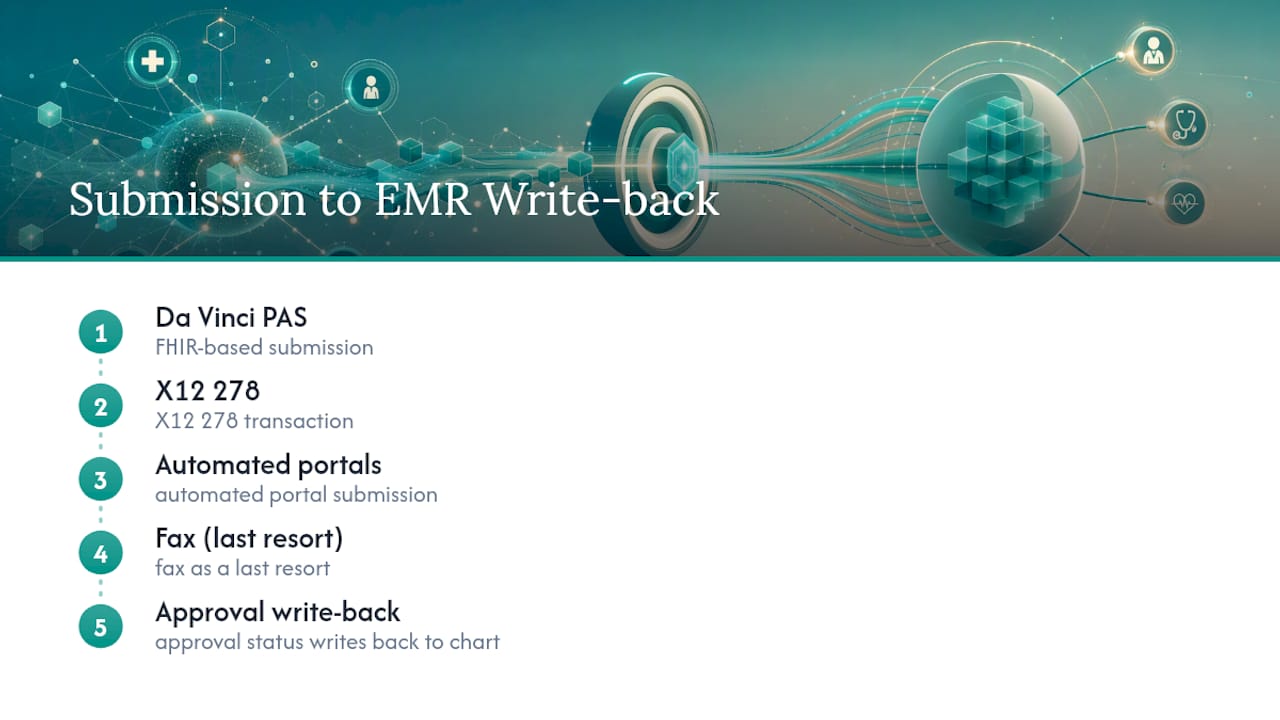
Submission channels and write-back. Look for support across Da Vinci PAS, X12 278 transactions, automated portal submission, and fax as a last resort. Approval status needs to write back into the chart without a staff member re-keying it.
Appeals and human review. Denials should route into an appeal-drafting queue that tracks timely-filing deadlines, with a human reviewer signing off before anything sends.
A single queue. Prospective and retrospective cases belong in one normalized queue, not two disconnected systems.
Pro Tip: Ask any vendor to show you their false-positive rate on prospective triggers before you ask about approval speed. A fast tool that flags PA on cases that don’t need it just moves the wasted work somewhere else.
How Should Clinics Evaluate Vendors and Pilot Results?
Vendor claims about “touchless” prior auth need to be tested against your own payer mix, not taken at face value. Structure the evaluation around a defined pilot scope and a small set of operational KPIs, then run integration tests that mirror your real EMR and payer connections.
- Scope the pilot narrowly. Pick one or two service lines and the payers that generate the most PA volume, rather than trying to automate everything at once.
- Track four KPIs. Minutes of staff time per case, first-pass approval rate, denial and appeal rate, and FTE hours recovered per month.
- Test the integration directly. Confirm the tool can read chart data, write approval status back, handle attachments correctly, and fall back gracefully when a payer connection fails.
- Check human controls. Every automated draft needs a reviewable audit trail and a clear sign-off point before submission.
- Watch for false positives. Industry analysis of optimized electronic PA workflows found that prospective-only automation often over-triggers on cases that don’t actually need authorization, wasting the time it was supposed to save.
Vendors that can’t produce real numbers on these five points during a pilot, not just a sales deck, aren’t ready for your payer mix yet.
Implementation Checklist: Running a Pilot Without Disrupting Care
A prior auth automation pilot fails most often because of workflow design, not the software itself. Follow a sequence that puts clinical safety and staff buy-in ahead of speed.
- Assemble the team. Name an IT lead for integration, a clinical reviewer for sign-off authority, and an operations owner for KPI tracking.
- Prepare data and privacy checks. Confirm what patient data fields the tool needs and verify its PHI handling meets HIPAA requirements before any chart data moves.
- Set integration milestones. Test chart read access, evidence assembly, payer submission across each supported channel, and status write-back as separate, verifiable steps.
- Design the queue and sign-off flow. Route every draft, whether prospective or retrospective, into one queue with a clear human checkpoint before submission.
- Train staff and set go/no-go criteria. Run a monitoring dashboard for two to four weeks and define, in advance, the KPI thresholds that decide whether the pilot expands.
Pro Tip: Build your go/no-go criteria before the pilot starts, not after you see the results. Teams that wait tend to grade on a curve once they’re invested in the tool.
What ROI Should Clinics Expect From Automating Prior Authorization?
Before automating anything, capture your baseline: average minutes per PA, denial rate, and appeal turnaround time. CAQH’s benchmark of roughly 11 minutes per electronic PA gives you a reasonable starting point if you haven’t measured your own yet.
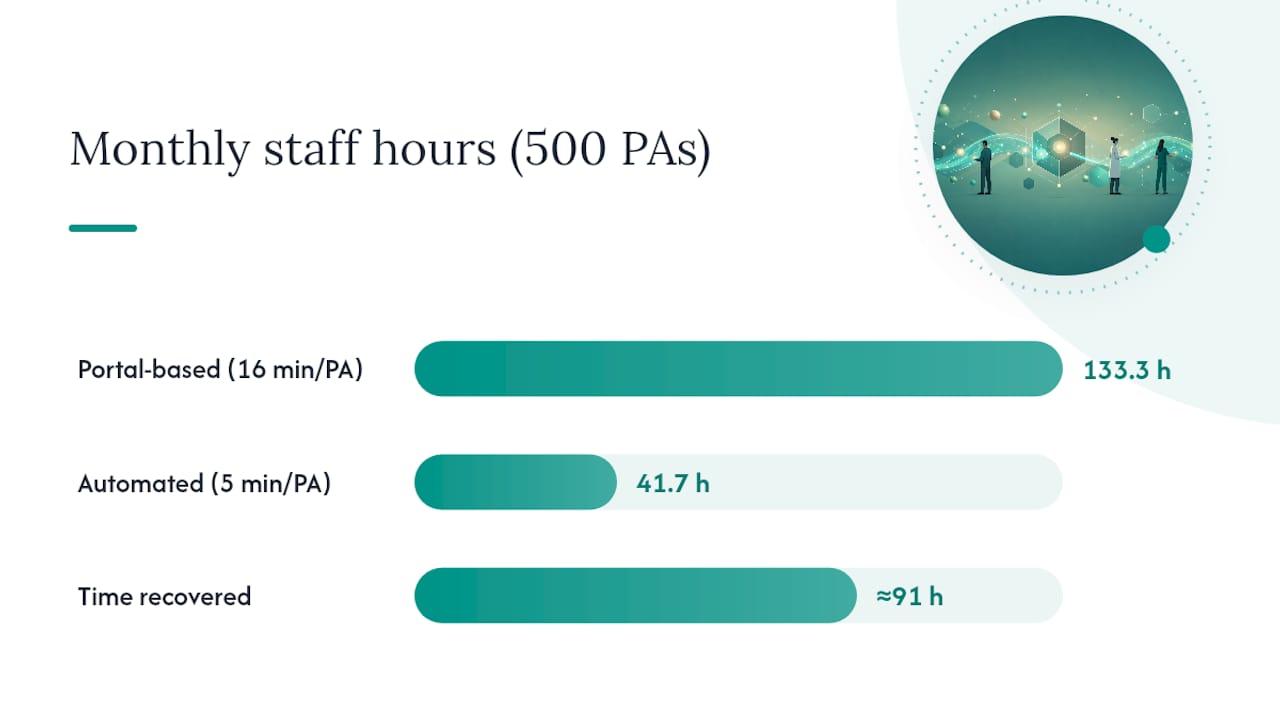
Statistic to build from: If a clinic processes 500 PAs a month and automation cuts average handling time from 16 minutes (portal-based) to roughly 5 minutes, that’s about 91 hours of staff time recovered monthly, before counting fewer denials from cleaner evidence packets.
- Nonfinancial gains matter too: faster patient access to care and more clinician time on actual medical decisions instead of paperwork.
- Watch for hidden costs: eligibility file errors and formulary mismatches can create false positives that offset time savings.
- A unified prospective and retrospective queue reduces duplicate staff effort, which is where a lot of the real savings actually come from.
What Clinics Consistently Get Wrong About Automating Prior Auth
The mistake I see most often is clinics buying a tool that only handles prospective PA and treating retrospective denials and appeals as a separate problem to solve later. That split creates two workflows, two training processes, and twice the chance something falls through. A single queue, as unified ePA approaches suggest, is worth prioritizing over almost any other feature on a vendor’s list.
Automate the low-hanging tasks first: routine medication refills, standard imaging orders, anything with a clear payer rule. Keep a clinician in the loop for complex or ambiguous cases; the long-term goal is touchless PA, but getting there without a human checkpoint on judgment calls is how denials and errors slip through. Start your pilot in the highest-volume service line you have, and hold the vendor to measurable service-level agreements from week one, not after the honeymoon period ends.
— Clint
How MedScrub Fits This Checklist
A suitable prior authorization automation tool should align with these priorities: syncing with major EMR systems, automated drafting of prior auth packets and appeals from chart data, and on-device PHI de-identification to keep patient data secure. That last point matters more than most vendors admit. The eSpiral case study shows AI running inside a clinical workflow while PHI stays on-device rather than moving to the cloud.
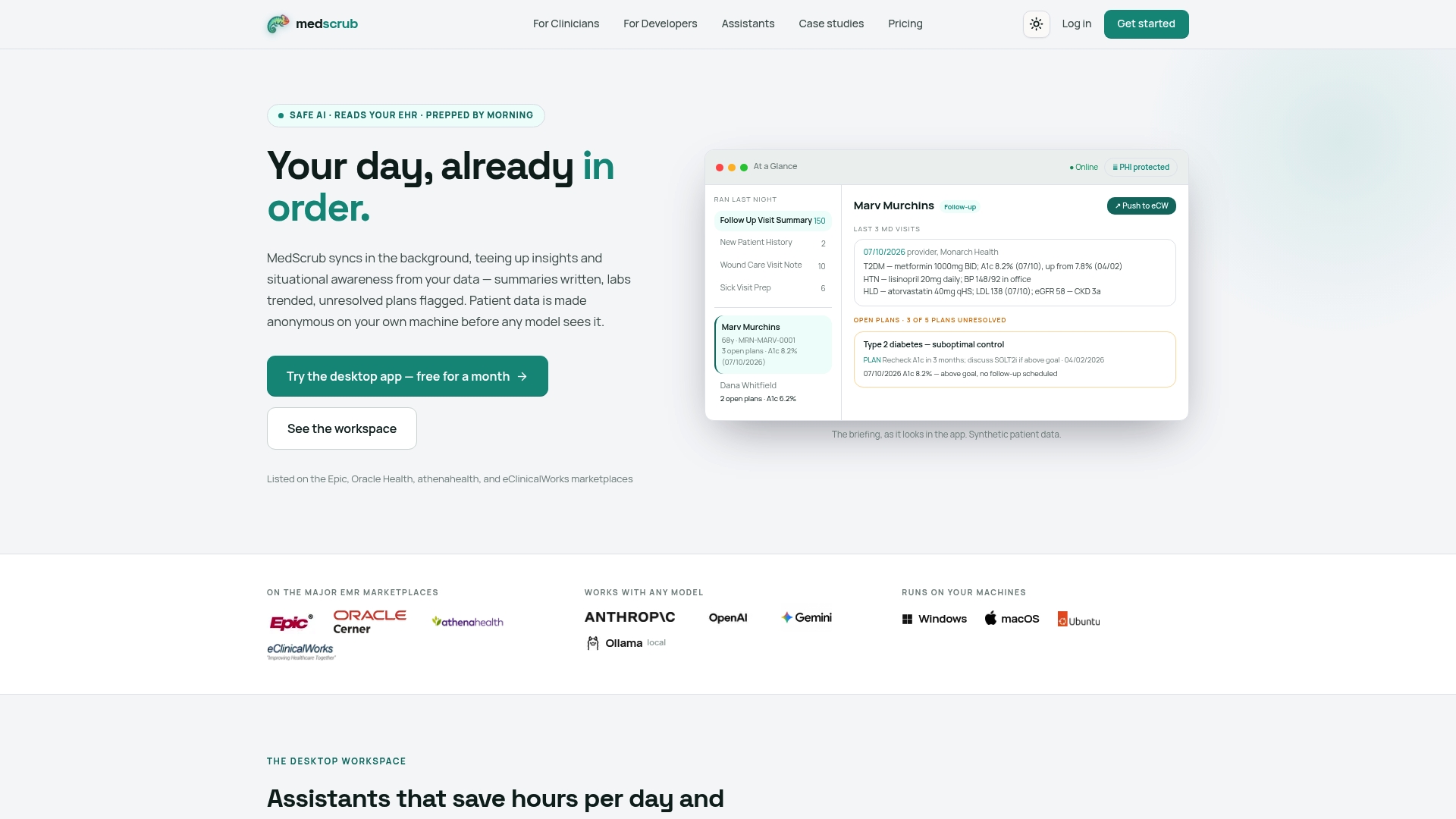
Nightly chart prep is another area worth watching. The Monarch Health case study documents how automated chart prep and open-plan tracking reduced the manual prep burden clinicians faced each morning, the same category of administrative drag that prior auth work adds on top of. If your clinic is ready to test this against your own payer mix, the practical next step is a scoped pilot, not a wholesale rollout. Visit the MedScrub page for clinicians to see how the sync, drafting, and privacy features map to your EMR, or review the full case study library before you commit staff time to an 8 to 12 week pilot.
This article is general information, not a substitute for advice from a qualified doctor. Consult a qualified healthcare professional about your own circumstances before acting on anything here.
Sources
- PMC article (touchless prior authorization commentary)
- 2023 CAQH Index report
- How optimized ePA is changing the game for health systems — Fierce Healthcare


