Keep PHI Local: Secure EMR Note Sharing for Clinical Teams
· 10 min read
Keep PHI Local: Secure EMR Note Sharing for Clinical Teams
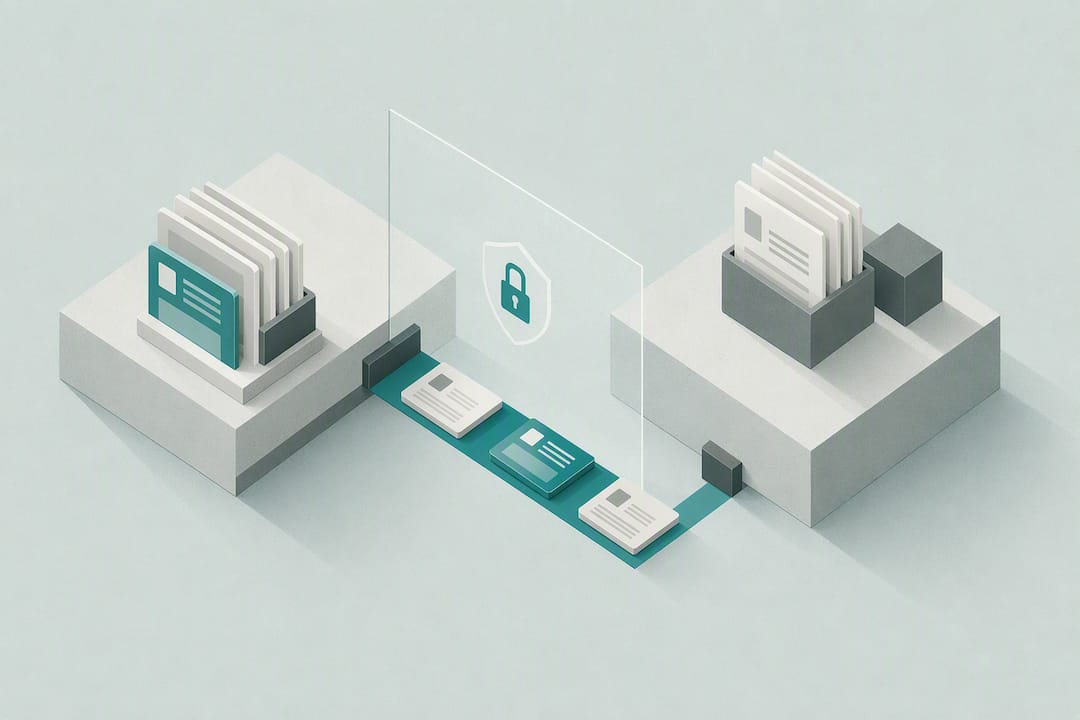
Secure note sharing for clinical workflows means exchanging EMR-linked notes only through standards-based APIs or documented de-identification workflows under a Business Associate Agreement. The two legal levers to know are HIPAA’s Safe Harbor and Expert Determination de-identification paths, backed by FHIR and SMART App Launch for the technical exchange. MedScrub fits this model directly, syncing with major EMRs while running de-identification on-device rather than in a cloud pipeline you don’t control.
TL;DR:
- De-identification of clinical notes can be achieved through Safe Harbor or Expert Determination methods, with the latter preserving more granular data but costing more.
- Standards-based data exchange, like FHIR and SMART App Launch, ensures interoperability and secure access, reducing the risk of compatibility issues.
- A thorough governance framework, including Business Associate Agreements and minimum-necessary policies, is essential to maintain compliance and prevent unauthorized PHI sharing.
- On-device de-identification tools, such as MedScrub, eliminate data transit risks by processing sensitive information locally before sharing or storing.
- Workflow discipline and clear ownership are critical to preventing informal data sharing methods that bypass secure protocols during note sharing.
Table of Contents
- What “Secure Note Sharing” Actually Covers for Clinical Teams
- Safe Harbor vs. Expert Determination: Picking a De-Identification Path
- How Do You Implement EMR-Integrated Note Exchange?
- What Governance Has to Sit on Top of the Technology
- De-Identification Checklist for Notes, Images, and Documents
- Building a Repeatable Pipeline: Intake to Release
- Where MedScrub Fits the Compliance Model
- What Actually Breaks Secure Note Sharing Rollouts
- Start With the Right MedScrub Page for Your Role
- Sources
- FAQ
What “Secure Note Sharing” Actually Covers for Clinical Teams
This is not about encrypted messaging apps or self-destructing links for personal use. It’s about how clinicians, care teams, and health IT systems exchange clinical notes, chart summaries, and structured data in ways that satisfy the HIPAA Security Rule and hold up under audit.
The Security Rule requires covered entities and business associates to protect the confidentiality, integrity, and availability of electronic PHI, and to implement reasonable, appropriate safeguards under 45 CFR §164.306. That’s the legal floor. Above it sits a stack of interoperability standards your systems should already speak:
- HL7 FHIR for resource-level exchange of notes, problems, and observations
- SMART App Launch for authenticated clinician access to EMR data from third-party apps
- Da Vinci HRex for payer/provider exchanges built on FHIR profiles
- US Core and USCDI for the baseline data elements every certified EMR must expose
Skip any of these and you’re building a custom integration that nobody else’s system understands.
Safe Harbor vs. Expert Determination: Picking a De-Identification Path
HIPAA gives you exactly two de-identification methods, and picking the wrong one either destroys your data’s analytic value or leaves re-identification risk on the table.
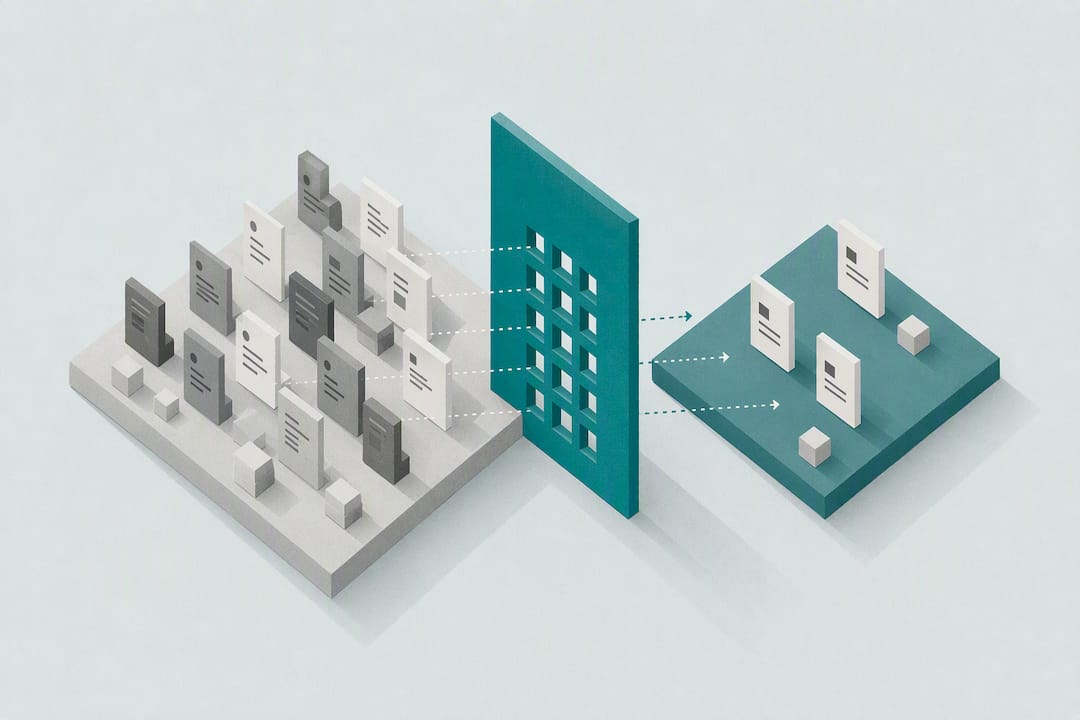
- Safe Harbor. Strip all 18 identifier categories, listed in HHS de-identification guidance, including names, dates tied to an individual, geographic subdivisions smaller than a state, and device identifiers. You also need “no actual knowledge” that the remaining data could identify someone on its own.
- Expert Determination. A qualified statistician or informatician certifies that re-identification risk is very small, using accepted statistical methods. This path costs more but preserves dates, rare conditions, and geographic detail that Safe Harbor would otherwise force you to generalize or drop.
Clinical notes are where this gets hard. Structured fields redact cleanly, but free text buries identifiers in narrative: “seen by Dr. Alvarez last Tuesday at the Riverside clinic” doesn’t trip a simple find-and-replace. That’s why de-identification for unstructured notes needs NLP-based named entity recognition layered under human QA, not automated scrubbing alone.
Statistic to know: even a properly executed Safe Harbor process can leave residual re-identification risk, according to HHS’s own guidance, which is why documentation and repeat testing matter more than the initial pass.
How Do You Implement EMR-Integrated Note Exchange?
Standards-based exchange beats point-to-point file transfers because every certified EMR already speaks the same language. FHIR handles the resource-level exchange, letting a note, a problem list entry, or a lab result move as a structured, versioned object instead of a flat PDF dump.
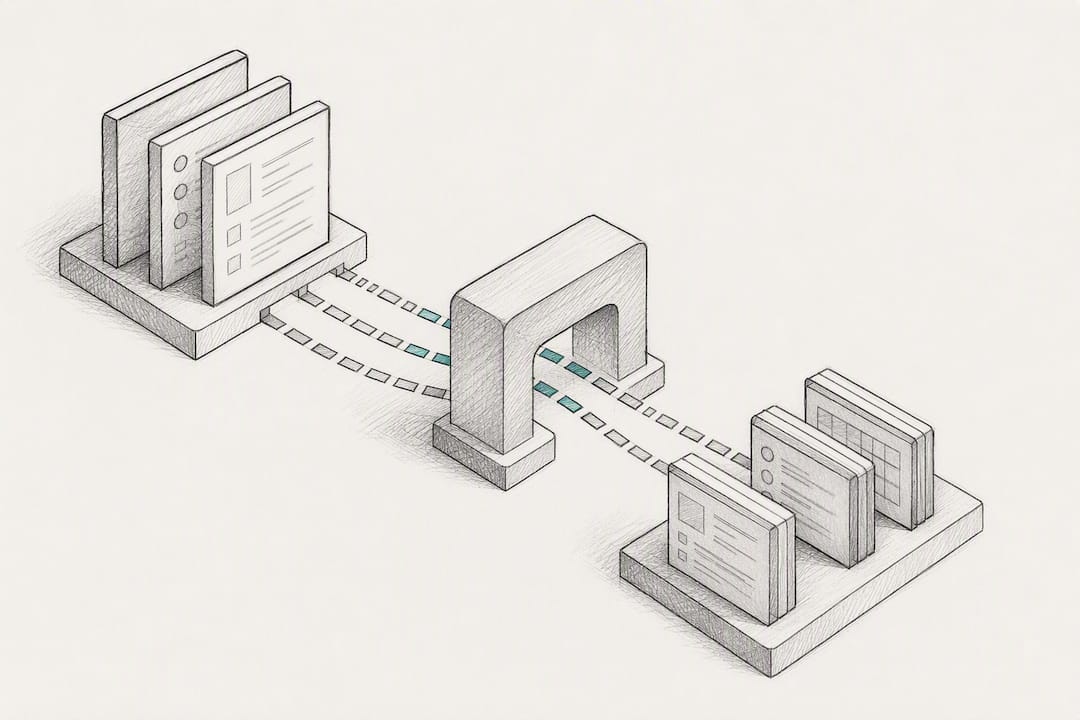
For clinician-facing apps, SMART App Launch is the industry-standard authentication framework, since it lets a third-party tool request scoped access to a specific patient’s record inside an existing EMR session rather than asking clinicians to manage a separate login.
A few things technical teams should prioritize:
- Da Vinci HRex for payer/provider exchanges, since it defines the FHIR profiles and privacy expectations most exchange partners already assume
- US Core / USCDI conformance so your data elements match what every other certified system expects
- OpenID Connect and token introspection for API-level authentication, not static API keys
- DS4P (Data Segmentation for Privacy) tagging for sensitive note segments like behavioral health or substance use, so access control can happen at the segment level, not just the document level
Get the auth layer wrong and you’ve built a fast, standards-compliant way to leak PHI.
What Governance Has to Sit on Top of the Technology
Technical controls without contracts and policy are half a compliance program. A Business Associate Agreement is required any time a third party creates, receives, maintains, or transmits PHI on a covered entity’s behalf, according to HHS guidance on business associates. Every vendor touching notes, whether it’s a de-identification tool or an AI summarization platform, needs one before PHI ever moves.
A workable BAA and governance setup should include:
- Explicit permitted uses and prohibited uses of shared data
- Security obligations matching or exceeding your own Security Rule safeguards
- Audit rights and breach notification timelines
- If you’re joining a health information network or HIO, expect public terms of participation, since HHS-referenced trusted exchange frameworks push networks toward publishing permitted uses so members aren’t surprised later
Minimum-necessary policy deserves its own line item. HHS notes that minimum necessary isn’t always strictly enforced for treatment-related exchanges, but treating it as a hard policy anyway simplifies your BAAs and gives auditors a clean answer.
Pro Tip: Write your minimum-necessary policy before you write your first data-sharing agreement. Retrofitting access scopes after a vendor relationship is live is where most access-creep happens.
De-Identification Checklist for Notes, Images, and Documents
PHI hides in more places than your EHR’s structured fields. Free-text notes, embedded image text, and document metadata routinely survive a redaction pass that only touches database columns, based on documented de-identification best practices.
| Content type | Where PHI hides | Primary control |
|---|---|---|
| EHR structured fields | Name, DOB, MRN columns | Field-level masking or removal |
| Clinical notes (free text) | Names, dates, locations in narrative | NLP/NER scan plus manual QA sampling |
| Scanned images / DICOM | Embedded headers, burned-in pixel text | Header stripping and pixel-level review |
| PDFs and exports | Metadata, hidden layers, tracked changes | Flattening and metadata removal |
Before any release, map all 18 Safe Harbor identifiers against every content type you handle, not just the obvious ones.
- Run automated NER first, then sample a percentage for human QA, since automation catches volume but misses context
- Strip DICOM headers and manually spot-check pixel data for burned-in annotations
- Flatten PDFs and remove metadata layers before export, not after
- Validate with k-anonymity or l-diversity checks, and retest after any dataset join, since joining two “clean” datasets can re-identify individuals neither dataset exposed alone
Document every pass. If a regulator or partner asks how you validated de-identification six months from now, “we ran a script once” isn’t an answer.
Building a Repeatable Pipeline: Intake to Release
A checklist only works if it’s attached to a workflow with named owners at each step.
- Intake. A requester submits a defined data or note-sharing request, tagged with purpose and recipient.
- Privacy sign-off. A privacy officer confirms the request fits an existing BAA or DUA and applies minimum-necessary scoping.
- Engineering de-identification. Automated NER and schema-based scrubbing run against the defined content types.
- QA. Human reviewers sample the output against the 18-identifier list and flag edge cases automation missed.
- Approver release. A named approver signs off, and the release is logged with a timestamp, requester, and method used.
Automate the schema contracts and the first-pass scanning. Never automate the final approval step, and never skip access logging on the release itself. Build in periodic revalidation, especially after any EMR version upgrade or new data source added to the pipeline, and have a written incident response plan for suspected re-identification.
Pro Tip: Assign the QA and approver roles to different people. A single person doing both de-identification and sign-off is the most common gap auditors find.
Where MedScrub Fits the Compliance Model
MedScrub was built around exactly this pipeline: sync with an EMR, de-identify on-device, and keep the approver’s audit trail intact. It integrates directly with Epic, Oracle Health, athenahealth, and eClinicalWorks, and because de-identification runs on-device rather than in a remote pipeline, PHI never has to leave the machine to generate a usable summary.
That architecture is why clinicians using the platform report saving roughly two hours a day on documentation, according to MedScrub’s clinician-facing data, time that shifts from chart prep back to patient care.
- On-device anonymization for chart summaries, SOAP notes, and prior auth drafts
- Native EMR sync instead of manual export/import cycles
- A documented implementation, the eSpiral case study, where PHI never left the local environment during rollout
For teams choosing between building an internal de-identification pipeline or adopting a platform designed around this exact workflow, that on-device model removes an entire category of data-transit risk.
What Actually Breaks Secure Note Sharing Rollouts
Most failures aren’t technical. They’re workflow mismatches. When de-identification adds friction to a clinician’s existing routine, staff route around it with personal email or screenshots, and no BAA covers that. Governance beats speed here: an auditable process with clear ownership will survive a compliance review that a fast, undocumented export never will. Build in scheduled revalidation from day one, not after the first incident.
— Clint
Start With the Right MedScrub Page for Your Role
If you’re a clinician evaluating this for your own documentation load, the fastest path is a trial through MedScrub’s clinician page, where you can see the on-device anonymization and EMR sync running against your own workflow instead of a demo environment. Developers building integrations should start with the developer page, which covers the PHI proxy API and how reversible de-identification works for FHIR access without exposing raw patient data to your build environment.
If you want to see how this plays out in production before committing to either path, the eSpiral case study walks through an implementation where PHI never left the local device throughout the rollout. Whichever door fits your role, that’s the concrete next step, not another feature comparison.
This article is general information, not a substitute for advice from a qualified doctor. Consult a qualified healthcare professional about your own circumstances before acting on anything here.
Sources
- Hhs
- FHIR and SMART standards listing (VA OIT)
- 45 CFR §164.306 - Security standards: General rules
- Da Vinci HRex implementation guide
FAQ
Do I Need a BAA for Every Note-Sharing Vendor?
Yes, if the vendor creates, receives, maintains, or transmits PHI on your behalf, a BAA is required under HHS guidance, regardless of how the data moves.
Should I Use Safe Harbor or Expert Determination for Clinical Notes?
Use Safe Harbor when you can afford to lose specific dates and geographic detail; use Expert Determination when preserving that detail matters for research or analytics and you can get a qualified statistician’s attestation.
Why Does Free-Text De-Identification Need Human Review?
Automated NLP/NER tools catch most identifiers in narrative notes but miss context-dependent references, so a sampling-based human QA pass is necessary to catch what automation misses.
Does MedScrub Handle De-Identification On-Device or in the Cloud?
MedScrub performs de-identification on-device, syncing with EMRs like Epic and Oracle Health while keeping PHI off remote servers during processing.
What Standards Should Our EMR Integration Support?
Prioritize FHIR for resource exchange, SMART App Launch for clinician authentication, and Da Vinci HRex plus US Core/USCDI conformance for payer and provider interoperability.